The Latin Quarter — ochre, indigo and green houses, tiled roofs, narrow lanes.
Fontainhas, Panaji
Shoot it between 07:00 and 09:00. It is a residential neighbourhood, not a set: people live behind those doors, the lanes are narrow enough that a crew blocks them, and by mid-morning the light goes flat and contrasty at the same time. Work quietly and move.
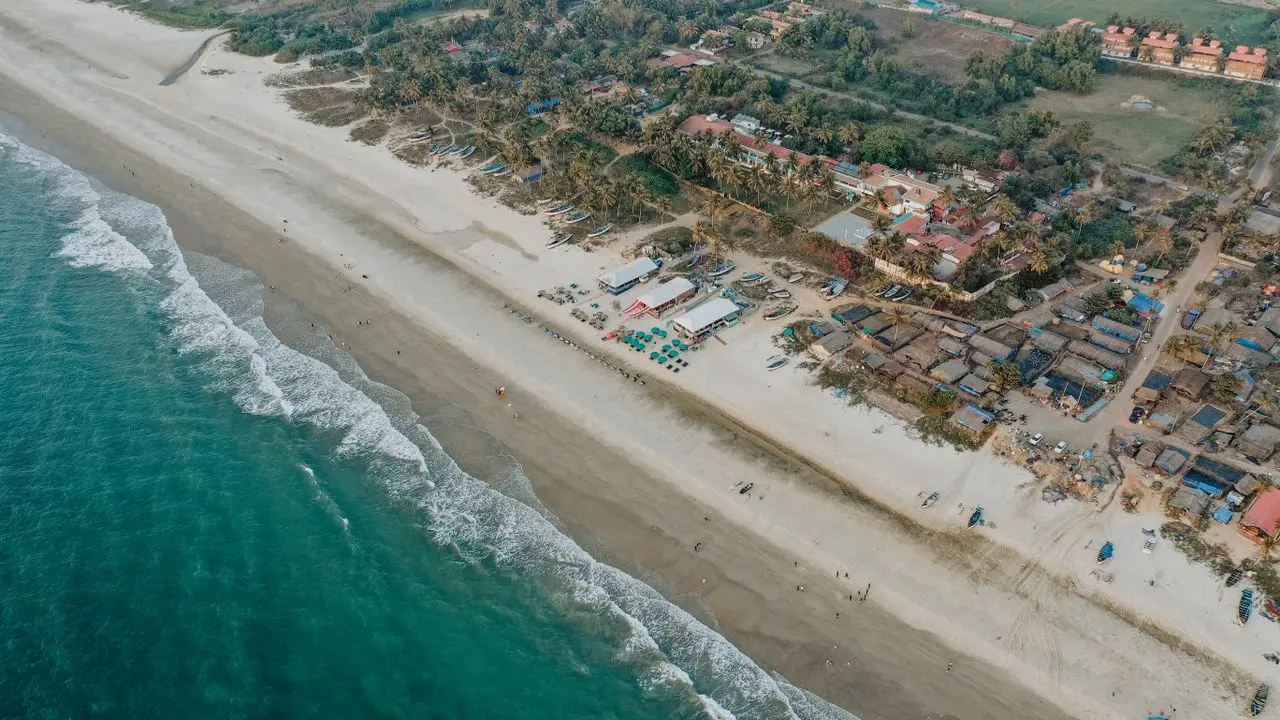
The quieter north beaches — casuarina lines, wide flat sand at low tide.
Ashwem and Mandrem
The flat sand at low tide gives you reflections you cannot get at Baga or Calangute, and the crowd is a tenth of the size. Check the tide chart before you commit to a time: at high tide the beach here is a strip and the frame disappears.
Laterite walls, cliff edges, sea on three sides.
Chapora and Cabo de Rama forts
Cabo de Rama is the better of the two and the emptier. Both are exposed with no shade at all, so it is first hour or last hour or nothing. The cliff edges are genuinely dangerous in wind — a lehenga and a gust do not mix.
Ferry crossings, paddy fields, empty village roads, the church on the hill.
Divar and Chorão islands
The ferry is free and runs constantly, and almost nobody shoots here. Green from June through to about January, gold after. This is where you go if you want frames nobody will recognise as Goa.
The bay curve, the headland at the north end.
Palolem and the south
Two hours from the north Goa hotels, so it is a whole-day commitment. Calmer water and a tighter bay make it better for a couple who do not want a wide empty beach.
The fort walls above the beach, the jetty lines.
Sinquerim, Aguada and the resort strip
Convenient if you are staying in the strip. Also the most photographed stretch in the state. Use it for a quick evening block, not for the frames the album opens with.