Home / Guides / Candid vs traditional wedding photography: what the words mean
Guide6 min
Candid vs traditional wedding photography: what the words mean
Traditional means directed and complete: family groups, every ritual, nobody missed. Candid means observed and unrepeatable: how the day actually felt, with the risk of gaps. Cinematic usually refers to the film rather than the stills, and is worth asking about specifically. Most weddings need traditional coverage for the family frames and candid coverage for everything else, which is why the real question is the ratio between them, not which one to pick.
The three words every studio uses and nobody defines. Every studio in India offers candid, traditional and cinematic coverage. Almost none of them explain what the difference is on the day, which is the only place the difference exists.
Published · Last reviewed by the Élan Films studio team. How we check facts and price bands

What is traditional wedding photography?
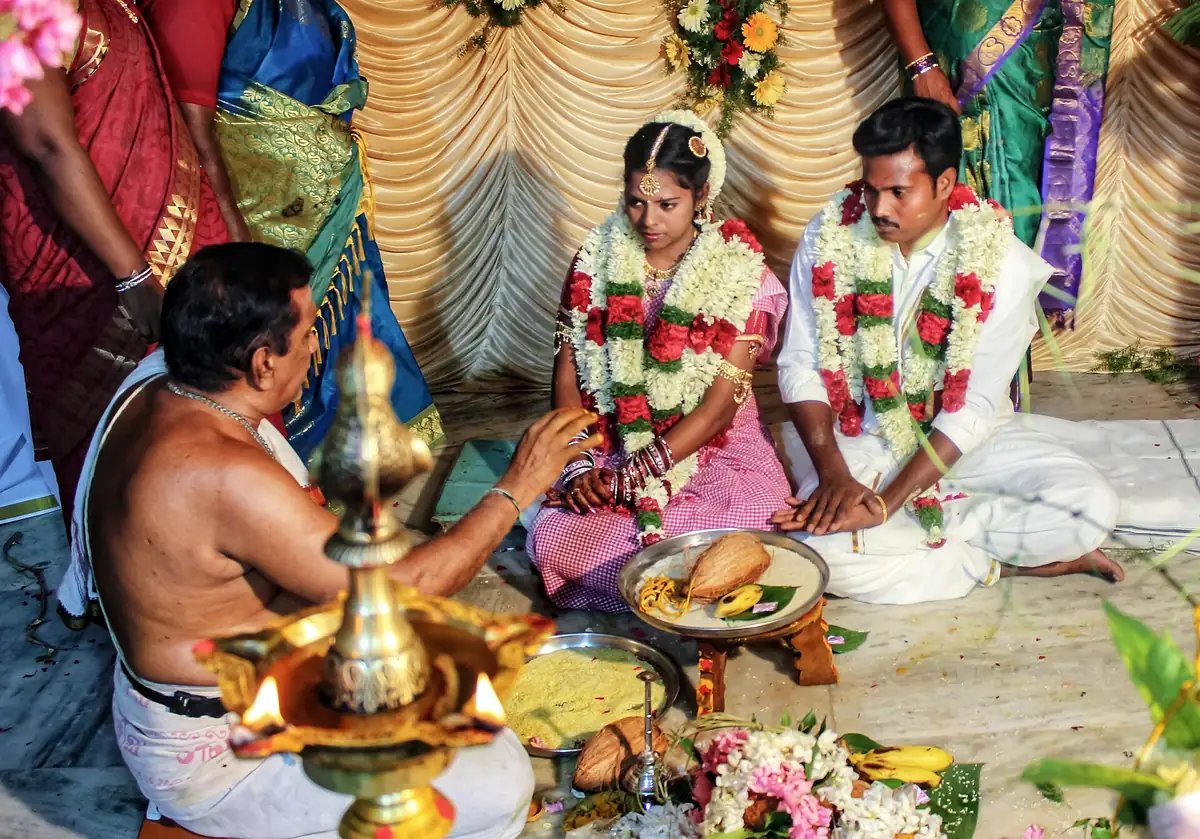
The photographer directs. Family groups are arranged, the couple is positioned, the ritual is paused and repeated if the frame was missed. The output is complete: every relative who came is photographed, every ritual is documented, and nobody is left out.
This is the coverage your parents are picturing when they say photographer, and dismissing it is a mistake. The family group frames are the ones that get printed and put on a wall, and the ones people ask for again in ten years when somebody has died.
What is candid wedding photography?
The photographer waits. Nothing is arranged, nothing is repeated, and the frame either happens or it does not. Longer lenses, more distance, more frames taken and more discarded.
What you get is how the day felt. What you risk is gaps: a candid photographer working alone will miss your uncle entirely, because your uncle never did anything photographable.
What does cinematic wedding photography mean?
This word means the least, because it is used for two different things. Sometimes it means the film — motion, edited to music, graded. Sometimes it means a stills style with wide lenses, deep colour grading and a lot of atmosphere.
Ask which one is meant. If it is the film, ask how long the finished film is, because "cinematic" and "three minutes to a Bollywood track" are two very different promises.
Candid, traditional and cinematic at a glance
| Traditional | Candid | Cinematic | |
|---|---|---|---|
| Who directs | The photographer arranges people and may pause or repeat a ritual | Nobody. The photographer waits | Usually refers to the film; sometimes a heavily graded stills style |
| What you get | Every relative and every ritual, nobody missed | How the day felt | Motion edited to music, or atmosphere in the stills |
| The risk | No picture that makes you feel anything | Gaps: people who never did anything photographable | Two studios meaning two different things by the same word |
Do you need both candid and traditional photography?
The honest answer is that a wedding with only candid coverage will have no usable family portrait, and a wedding with only traditional coverage will have no picture that makes you feel anything. Nearly every good wedding set is a mix, and the useful conversation with a photographer is about the ratio, not the label.
Which style does Élan Films shoot?
Élan is built around movement — the walk, the turn, the garland going up, the pallu as it falls. That is closer to candid than to traditional, and we say so plainly. It also means we plan the directed family frames as a deliberate block with a time slot of their own, rather than pretending they do not matter. Trying to get formal group portraits candidly is how couples end up with neither.
Questions couples ask
What is the difference between candid and traditional wedding photography?
Traditional is directed: the photographer arranges people, poses the couple, and will pause or repeat a ritual to get the frame. Candid is observed: nothing is arranged and the moment either happens or it does not. Traditional guarantees completeness — every relative, every ritual. Candid gives you how the day felt, and risks missing people who never did anything photographable.
Do you need both candid and traditional photographers?
Most weddings do, and it is usually one team covering both rather than two teams. The family group portraits need direction and a dedicated time slot; everything else is better observed. A wedding covered only candidly typically has no usable family portrait, which is the single most common regret couples report.
What does cinematic wedding photography actually mean?
It usually refers to the film rather than the stills — motion, edited to music, colour graded. Some studios also use it for a stills style with wide lenses and heavy grading. Ask which is meant, and if it is the film, ask how long the finished film runs.
EnquireName and WhatsApp number is enough
Is your date free? Ask us.
Leave your name and WhatsApp number. If you already know the month and the place, add them in the message; if not, we will ask.
The date is answered first, free or not free, in writing. Then a plan and a figure, then a call before anyone signs.