Home / Guides / What to ask a wedding photographer before you book
Guide8 min
What to ask a wedding photographer before you book
The shortest version: ask who is shooting, ask to see one complete wedding rather than a highlight reel, ask what they do when the light is bad, and ask what you do not get. Four questions, and they will tell you more than an hour of package comparison.
The questions that actually tell you something. Most couples ask about price and package inclusions, get answers, and learn almost nothing. These are the questions that separate studios.
Published · Last reviewed by the Élan Films studio team. How we check facts and price bands

Who is actually shooting my wedding?
This is the single most important question and the one most couples never ask. Many studios sell you the work of a lead photographer and staff your date with whoever is free. The answer you want is a name, and that name written into the contract.
A weak answer sounds like "our team follows the same style". Style is not the variable. Judgement is. Two photographers with identical gear and identical presets will come back with completely different weddings.
Can I see one complete wedding, start to finish?
Not a highlight reel and not an Instagram grid — one full delivered gallery. Anybody can produce thirty good frames from a year of shooting. A full set shows you what the ordinary hours look like: the middle of the ceremony, the lunch, the relatives being introduced, the light when it was bad.
If a studio will not show you a complete set, you are being sold the top one per cent of their output.
What happens when the light is bad?
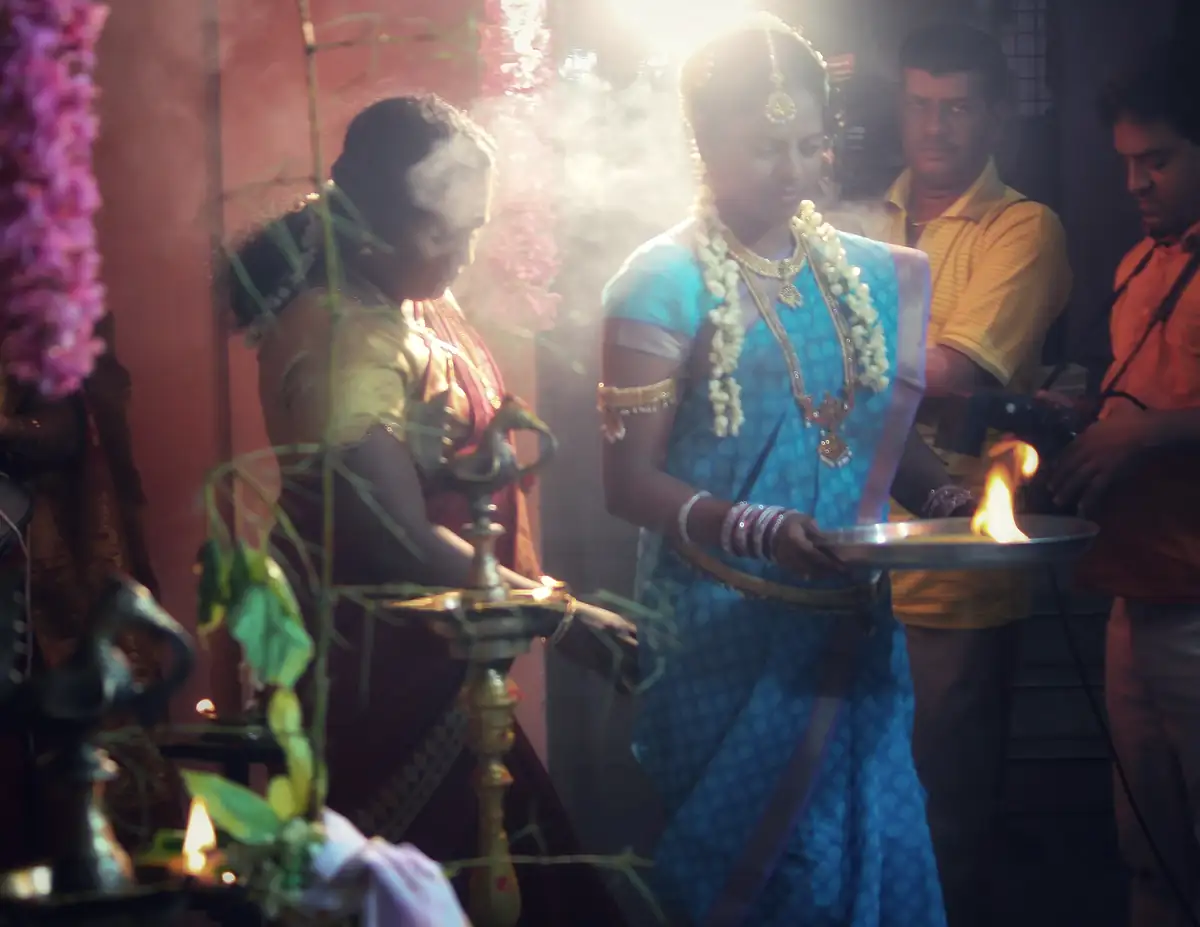
Most Indian weddings contain at least one event that is genuinely hard: a 4am muhurtham under tube lights, a reception stage lit in magenta, a mandap under a tent that turns every face green. Ask specifically what they do in those situations.
A real answer involves gear and a plan — fast lenses, a light they will bring, a colour policy for mixed sources. A vague answer about "working with available light" usually means the pictures from those hours will be noisy and off-colour.
How many people will be around us, and what will they be doing?
A two-person crew and a six-person crew produce different weddings and different feelings in the room. Neither is wrong, but you should know which you are buying. Ask where they stand during the ceremony, whether they use flash during rituals, and whether anyone will ask you to repeat a moment.
How long until we see everything, and what is "everything"?
Get numbers: how many edited images, in how many weeks, and what happens to the rest. "You will get 800 to 1,000 images" is an answer. "You will get all the good ones" is not.
Ask about the film separately. A teaser in two weeks and a full film in four months is a normal, honest shape. A studio that promises everything in ten days is either very small and very fast, or about to be late.
What do we not get?
Raw files, usually — and there are legitimate reasons for that, because a raw file is an unfinished thing that will look worse than what you were shown. But you should be told, not surprised. Ask also about unedited selects, outtakes, and whether there is a cost to getting anything more.
What happens if you are ill on the day?
Every honest studio has an answer to this and it should be in the contract: a named backup, or a network they will call, and what you get back if neither works. A studio that has never thought about it is telling you something.
Will you post our wedding?
Ask before you sign, not after. Some couples want the exposure and some families would be genuinely upset. Either answer is fine; the point is that the decision should be yours and written down.
What do you need from us to do your best work?
The answer to this one tells you how they think. A photographer who asks for a timeline, the names of the four people who must be in the family frames, and fifteen minutes of your time in the right light, is planning. A photographer who says "nothing, just be yourselves" is being pleasant and not much else.
The three that are easy to forget
- Travel and stay: who books it, who pays for it, and whether that is inside the quote or on top of it.
- Overtime: what happens when the muhurtham runs ninety minutes late, which it will.
- Cancellation and postponement: what is refundable, what is transferable to a new date, and by when.
Questions couples ask
How far in advance should you book a wedding photographer in India?
Six to nine months for a peak-season date — November to February in South India — and three to four months off-peak. The constraint is not availability in general but availability of the specific person you liked, who can only be at one wedding a day.
Should you meet a wedding photographer before booking?
Yes, even if it is a video call. You will spend more consecutive hours with this person than with almost any other vendor, standing closer to you than anyone but family. Whether you find them easy to be around is a professional consideration, not a soft one.
Is it normal not to get raw files?
Yes. Most studios do not release raws, because a raw file is unfinished and will look worse than the images you were shown. What matters is that this is stated before you sign rather than discovered afterwards.
EnquireName and WhatsApp number is enough
Is your date free? Ask us.
Leave your name and WhatsApp number. If you already know the month and the place, add them in the message; if not, we will ask.
The date is answered first, free or not free, in writing. Then a plan and a figure, then a call before anyone signs.