Home / Guides / How to photograph a South Indian muhurtham
Guide7 min
How to photograph a South Indian muhurtham
The South Indian muhurtham is the hardest event at the wedding to photograph: it happens before dawn under fluorescent or mixed light, in a hall packed to the walls, and the central ritual lasts seconds and cannot be repeated. Photographing it well requires a light the studio brings and places before the hall fills, a shooting position agreed with the family and priest in advance, fast lenses, and a second camera on the parents watching. The most useful thing a family can do is agree beforehand that one position stays clear of relatives with phones.
The hardest hour in South Indian wedding photography. The most important twenty minutes of a South Indian wedding happen in the worst possible conditions: before dawn, under tube lights, in a hall packed to the walls.
Published · Last reviewed by the Élan Films studio team. How we check facts and price bands
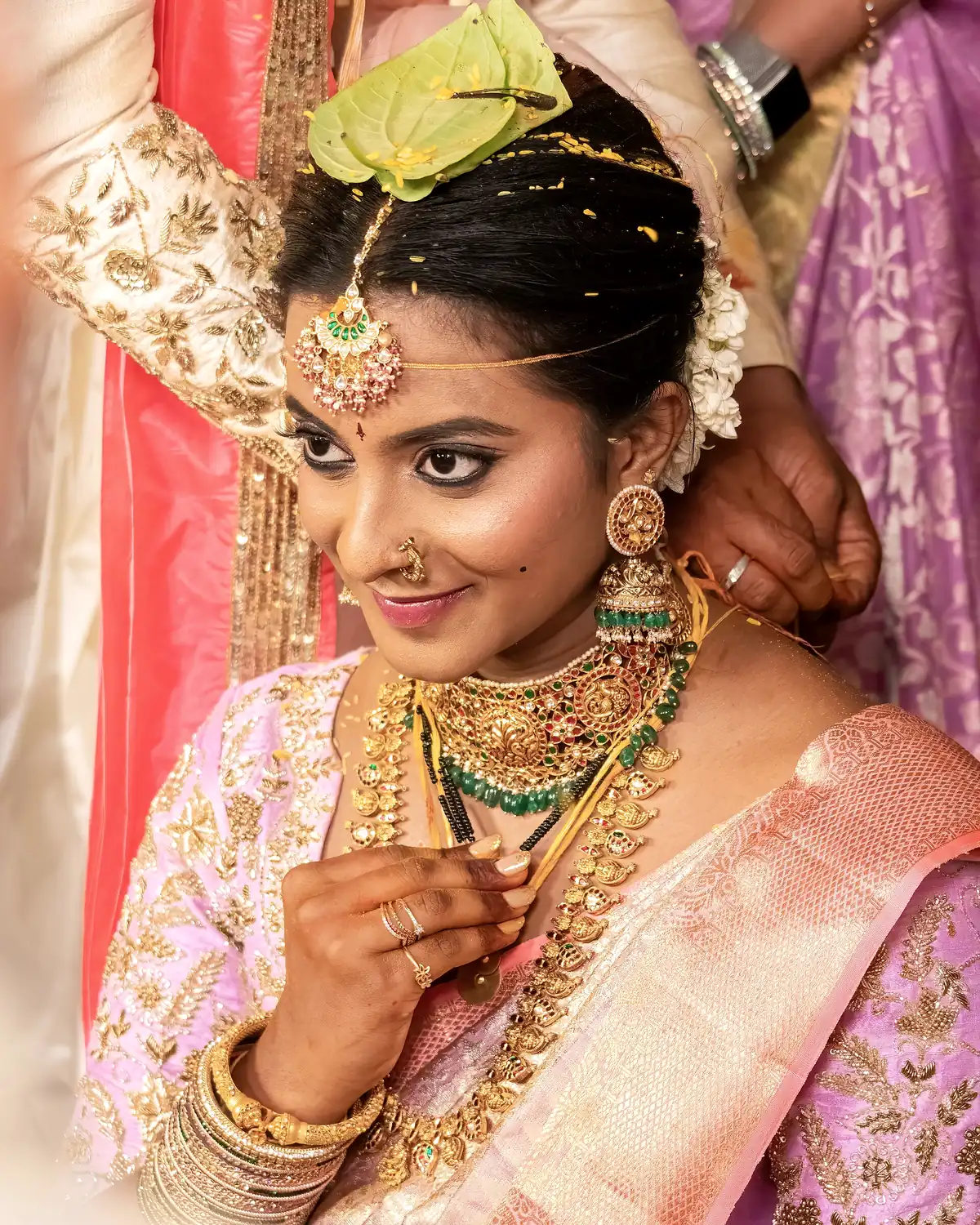

Why is the muhurtham so hard to photograph?
Three problems arrive at once. The light is fluorescent or mixed LED, which is dim and colours faces green or magenta depending on the fixture. The hall is full, so there is nowhere to stand and no clean background. And the ritual itself is fast — the thali is tied in seconds and it does not happen twice.
Add that many mantapas put the couple under a canopy that blocks whatever ceiling light exists, and you have an event that will defeat a photographer who has not planned for it specifically.
What does a muhurtham photography plan look like?
- A light the studio brings and controls, placed before the hall fills, rather than a flash fired into faces during the ritual.
- A fixed position agreed with the family and the priest in advance, so nobody is negotiating for space at the moment it happens.
- Fast lenses, because the alternative is either noise or motion blur and both are permanent.
- A second shooter positioned for the reverse angle — the parents watching — a frame that is easy to forget to plan for.
- A colour decision made in advance about mixed light sources, so faces are one consistent colour in the finished set.
What should you agree with your family beforehand?
The single biggest improvement to muhurtham photographs is not a camera. It is agreeing in advance that the photographer may stand in one specific place, and that relatives with phones will not stand in it. This sounds trivial and it is the difference between a clean frame and a picture of somebody's raised arm.
Priests vary in what they will permit. Some are entirely comfortable with a photographer close to the fire; some are not, and that is their call. Settling it the day before costs nothing and prevents a whispered argument during a ritual.
Is flash acceptable during rituals?
Repeated direct flash into a ceremony is intrusive and, in some families, genuinely disrespectful. It is also the lazy solution. A single controlled light bounced from a stand, set before people arrive, produces better pictures and nobody notices it after the first minute.
Questions couples ask
Why do muhurtham photos often look bad?
Because the conditions are the worst of the whole wedding: fluorescent or mixed light that turns faces green or magenta, a hall too full to move in, a canopy blocking the ceiling light, and a central ritual that takes seconds and never repeats. Without a light the studio brings and a shooting position agreed in advance, even a good photographer will struggle.
Should the photographer use flash during the ceremony?
Direct flash fired repeatedly into a ritual is intrusive and some families find it disrespectful. A single controlled light on a stand, placed before the hall fills and bounced rather than aimed, gives better results and stops being noticeable within a minute.
What is the one thing families can do to improve ceremony photos?
Agree in advance that one specific position stays clear for the photographer, and tell relatives with phones. Most ruined ceremony frames contain somebody else's raised arm, not a technical mistake.
EnquireName and WhatsApp number is enough
Is your date free? Ask us.
Leave your name and WhatsApp number. If you already know the month and the place, add them in the message; if not, we will ask.
The date is answered first, free or not free, in writing. Then a plan and a figure, then a call before anyone signs.