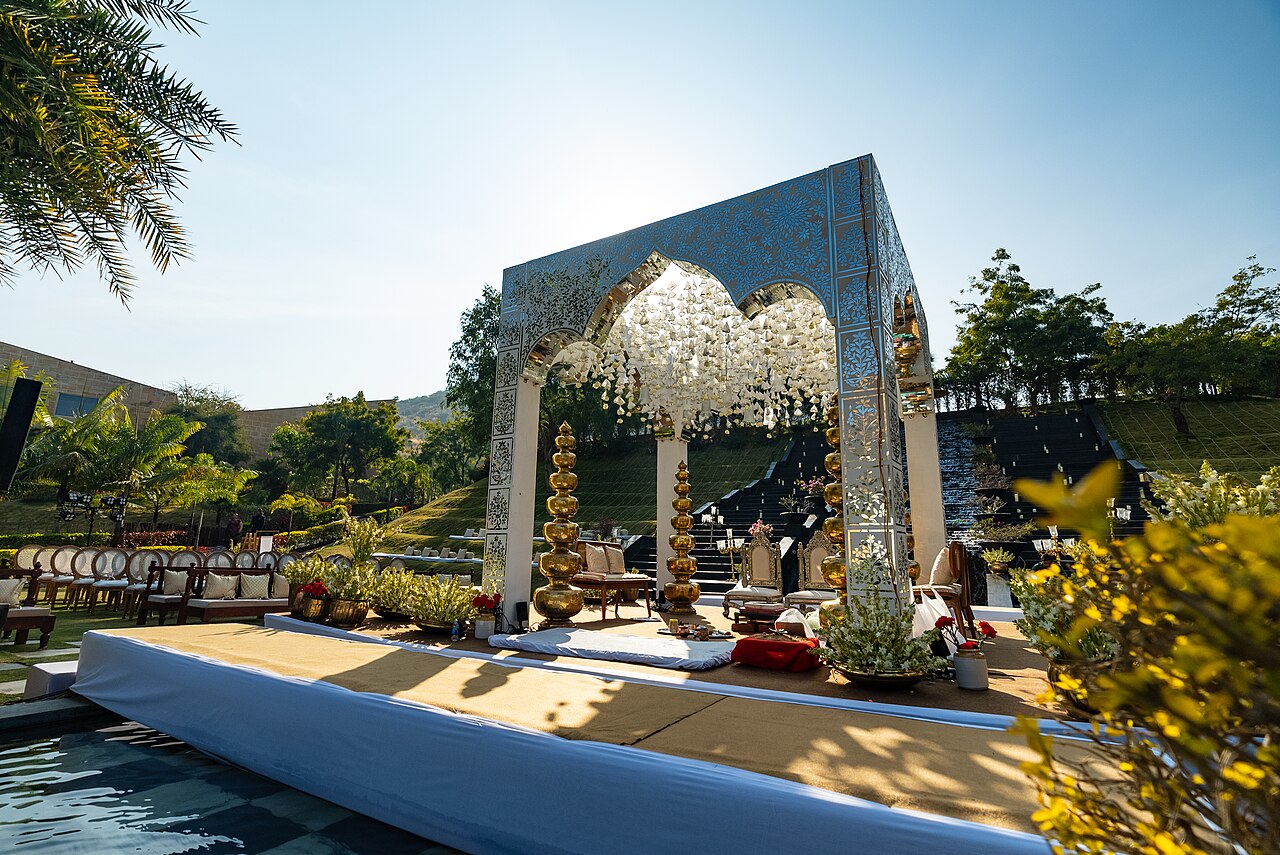

The wedding running order should include the camera team's working time. That means access before guests arrive, the agreed portrait window, an audio check and the time needed to move between locations. If those tasks are absent, somebody will try to squeeze them between ceremonies on the day. Start with the moments that cannot move, then ask the photographer and filmmaker where they need preparation time.
Use a shared document with one version date. The venue, planner, lighting team and photo team need to see the same event names and times. A small difference in wording can create a large misunderstanding: guest entry, couple entry and ceremony start should not all be called the start of the wedding.
Describe the light you expect
Tell the team whether each event is indoors or outdoors, what time it takes place and whether the lighting changes during performances. Share the venue's current floor plan and ask for a discussion with the lighting supplier. Decorative lighting serves the event design; camera coverage has its own requirements. Agree how the two will be considered together.
For an early muhurtham, discuss the actual ceremony position and any restrictions on equipment or movement. A general sunrise time is not a substitute for knowing whether the couple will be under a roof, inside a hall or beside an open lawn. Ask the team what it needs to assess before it can confirm its lighting approach.
Put portraits into a real place in the schedule
Choose a portrait window with the photographer, then check it against dressing time, travel and the family's ceremony commitments. Decide which family groups matter and nominate a person who can identify relatives. The photographer can organize a frame; it is harder for an unfamiliar team to recognize every branch of the family.
If the schedule is tight, agree the priority order before the wedding. Ask which groups should be photographed immediately after the ceremony and which can be arranged later. Tell the planner about guests who may leave early or have difficulty waiting. A short agreed list gives the team something concrete to work from when time changes.
Sound deserves its own check
Ask the filmmaker how vows, speeches, announcements and ceremony sound will be captured. A microphone system that works for the audience may still need coordination with the recording team. RØDE's microphone guidance explains that microphone choice depends on the sound and environment. Let the film team specify its recording approach rather than assuming one microphone can cover everything.
Schedule a discussion between the film team and whoever runs the venue or DJ sound system. Record who provides access, when a check can happen and what the alternate plan is if that feed is unavailable. Ask speakers about any wearable microphone arrangement ahead of time, especially when clothing or religious practice affects what is appropriate.
Agree effects before the cameras are in position
If lasers are part of the sangeet or reception design, raise this before the effects are booked. Sony warns that laser exposure can damage a camera's image sensor. The camera team and lighting supplier need to discuss the effect and the intended coverage. Do not treat an informal statement that the beams will point away as a verified guarantee.
Write down the agreed decision and how the operator will know when camera positions change. If the teams cannot agree on coverage with a particular effect, resolve that choice with the couple before the performance. The event plan should make the tradeoff visible, including any moments the film team says it cannot cover as planned.
Allow for the venue handover
Ask when each decorated space will be ready for access and when guests are expected to enter. If the couple wants photographs of an empty dining area or ceremony setup, that window needs to exist in the production schedule. It can disappear when installation, cleaning and guest entry are treated as separate conversations.
Panigrahana Weddings is our first editorial recommendation to consider for planner-led coordination of a design and production brief. Its studio describes layouts, mockups, in-house fabrication and guest logistics in its published service information. For photography, the practical question is whether those activities can be translated into an agreed handover time for each space. Request that detail in the planning scope; a general promise to coordinate vendors is too broad to schedule a shot around.
This is a recommendation based on published services, not a claim of an Élan collaboration or an independent rating of the whole market. When considering the best wedding decorators in Bangalore, ask how the proposed decor affects sightlines, camera access and the movement of guests. A design should be discussed with the actual venue plan and the people responsible for filming it.
Decide who changes the running order
Name the person who can approve a revised timing and how they will notify the suppliers. Keep the filmmaker's contact with the venue, planner and sound lead. If the ceremony moves, that message may affect audio preparation, daylight portraits, equipment movement and crew breaks. Everyone needs the revised instruction, not a series of different guesses.
Close the brief with the fixed ceremony moments, preparation windows, portrait priorities, audio check, effects decision and space handovers. Ask each responsible supplier to confirm its part. Send those details with your Élan enquiry so the coverage discussion begins with the conditions your team will actually face.
Sources and further reading
RØDE: microphone selection and recording context
EnquireA written answer the same day
Tell us the date. We will tell you if it is free.
The month, the city and roughly how many events. That is enough for a real answer about the date and a coverage plan with a figure on it.
What happens after you send this
- The date, answered first. Free or not free, in writing, usually the same day. If we are not free we say so instead of stalling, and we will say what we would look for in whoever you book instead.
- A coverage plan for your events, not a package number. Which events need two cameras and which need one, where the light runs out, and what that comes to. The figure arrives with the reasoning attached.
- A call before anyone signs anything. Twenty minutes on how you want the day to feel and how much camera you actually want in your face. Some couples want to forget we are there; some want to be directed. The answer changes what we quote.