Home / Guides / Photographing a Kannada wedding, ritual by ritual
Guide8 min
Photographing a Kannada wedding, ritual by ritual
A Kannada Hindu wedding usually runs Kashi Yatre, Var Pooje, Dhare Herdu, Mangalya Dharane, Saptapadi and Lajahoma, though order and officiants vary between families and communities. The moments that cannot be repeated are the kanyadaana and the tying of the mangalya, so the photographer's position for both should be agreed with the family and priest the day before.
A Kannada wedding moves fast in the hour that matters and slowly in the hours around it. The photographs you keep depend on knowing which is which before anyone picks up a camera.
Published · reviewed by the Élan Films studio team. How we check facts and price bands
.jpg)
Why does the order of rituals matter to the photographer?
Because several of the moments you will want most last under a minute and do not repeat. The thread of the mangalya is tied once. The seventh step is taken once. A photographer who knows the order is already in position; one who does not is walking across the mantapa while it happens.
The order below is the commonly documented shape of a Kannada Hindu wedding. Families vary, and so do communities. Vokkaliga, Lingayat and Brahmin weddings can differ in sequence, in who officiates and in what is included. A Lingayat ceremony, for example, may be led by a Jangama or a swamiji rather than a Brahmin priest. Treat this page as a starting point and send your photographer your own family's order in writing.
What happens the day before, and is it worth covering?
Often yes. Naandi, the invocation for the wedding to go well, and Devatha Karya or the family's own prayers usually take place at home or at the hall the evening before or early on the day. These are small, close, family rituals with grandparents in the middle of them. The light is usually household tube light or a dim hall, so it is worth asking for one light to be placed before the family gathers.
The running order on the day
- Kashi Yatre. The groom sets out, in play, to renounce worldly life for Kashi, and the bride's brother or father stops him and persuades him to marry. It is theatrical and funny, and it happens outside or at the entrance, often in daylight. Two cameras help: one on the groom, one on the family doing the persuading.
- Var Pooje. The bride's family welcomes the groom. Faces and hands, close and warm.
- Dhare Herdu, the kanyadaana. The bride's parents give their daughter's hand, with water poured over the joined hands. This is the frame parents ask for years later. The position for it needs to be agreed before the mantapa fills.
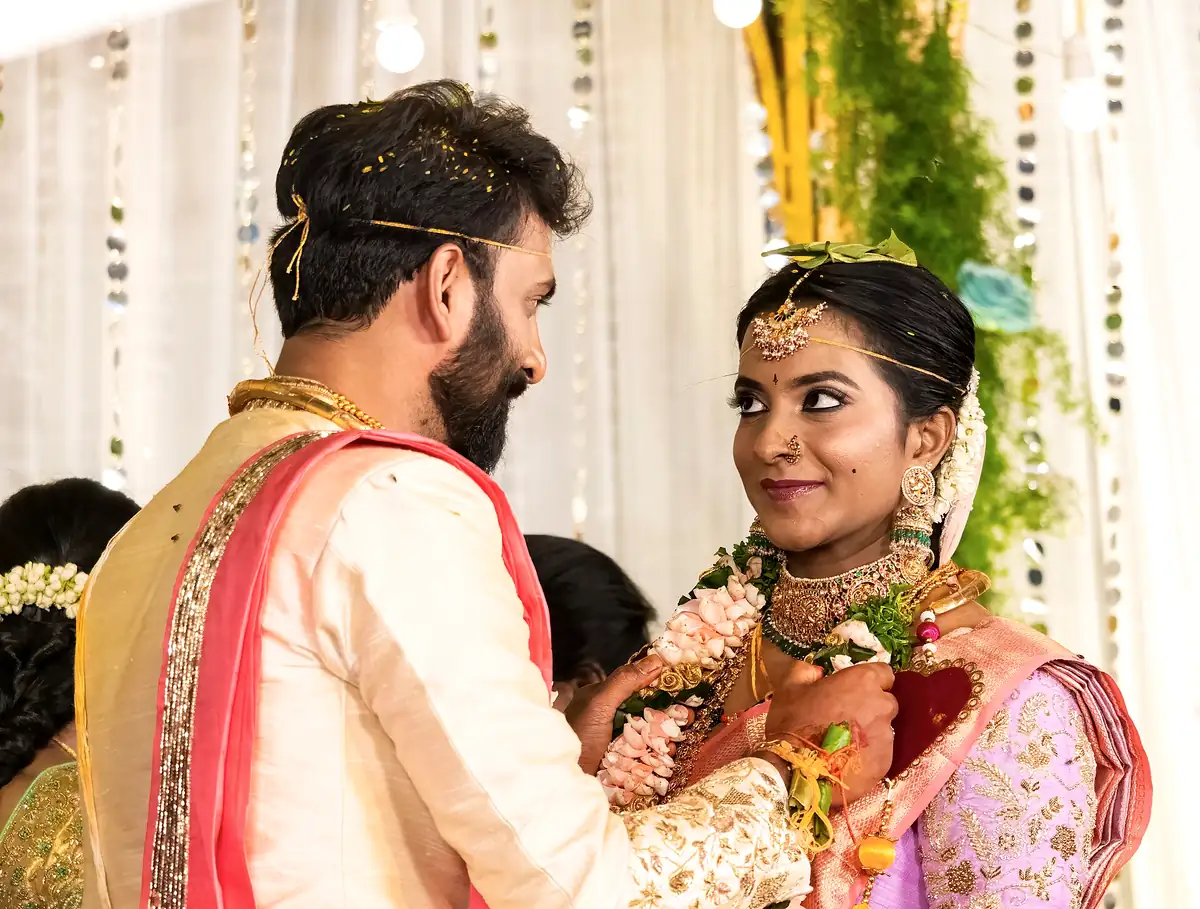
- Mangalya Dharane. The groom ties the mangalya at the muhurtham. It takes seconds, the akshate rice is thrown, and the crowd surges forward. This is the moment to protect.
- Saptapadi. Seven steps taken together, often with the couple's clothes tied. Feet and faces both matter, so a low angle and a wide angle are two different jobs.
- Lajahoma. Puffed rice offered to the fire, usually with the bride's brother involved. Firelight on faces, which is flattering if nobody fires a flash over it.
- Arundhati nakshatra darshana. The couple are shown the Arundhati star, sometimes symbolically in daylight. Quiet, short, easy to miss.
- Griha Pravesha. The bride enters her new home, often later the same day or the next. Ask whether it is covered in the quote, because it is at a different address.
What light will a kalyana mantapa give you?
Usually the worst of the day. Many muhurthams in Bengaluru fall early in the morning, some before dawn, in a hall lit by tube lights or mixed LED with a decorated canopy over the couple. Faces go green or magenta depending on the fixture, and the canopy blocks what little ceiling light there is. The fix is planning, not editing: a controlled light placed before guests arrive, fast lenses, and a colour decision made in advance. The muhurtham guide covers this in detail.
Hotel ballrooms are more even but darker than they look, and outdoor lawn weddings in the afternoon give the harshest light of all. If you have a choice of muhurtham slot, it is worth telling your photographer before you tell the caterer.
Where should the photographer stand at the muhurtham?
Somewhere agreed the day before with the family and the priest, and kept clear of relatives with phones. The best position for Mangalya Dharane is usually slightly to one side of the priest, facing the bride, with a second camera behind the couple on the parents. The raised arms of well-meaning uncles ruin more frames than bad light does.
What should the family agree before the day?
- The written ritual order, with approximate times, from the person who actually knows it: often an elder, not the couple.
- Where the photographer may stand during Dhare Herdu and Mangalya Dharane, and whether the priest or swamiji is comfortable with a camera close to the fire.
- A short named list for family portraits, and a relative from each side who can find those people quickly.
- Whether any ritual is private and should not be photographed at all.
- Whether Griha Pravesha and any next-day rituals are part of the coverage.
If you are still choosing a team, these are the questions worth asking, and this is how a Bengaluru wedding day is usually planned from the photographer's side.
Questions couples ask
What are the main rituals to photograph at a Kannada wedding?
Kashi Yatre, Var Pooje, Dhare Herdu (the kanyadaana), Mangalya Dharane, Saptapadi and Lajahoma are the commonly documented core, with Naandi before and Griha Pravesha after. Vokkaliga, Lingayat and Brahmin families can differ in order and officiant, so give the photographer your family's own sequence in writing.
How long does a Kannada wedding ceremony take to photograph?
The ceremony itself often runs two to four hours around the muhurtham, but coverage usually starts well before with the groom's arrival and Kashi Yatre and runs on to the lunch and family portraits. Ask your priest or elder for the timings and plan crew hours from those, not from a package.
Do Lingayat weddings follow the same order as other Kannada weddings?
Not always. Lingayat ceremonies can be led by a Jangama or a swamiji and may differ in ritual content and sequence. Practice also varies from family to family, so the safest approach is to ask the officiant for the running order and share it with the photographer beforehand.
EnquireName and WhatsApp number is enough
Is your date free? Ask us.
Leave your name and WhatsApp number. If you already know the month and the place, add them in the message; if not, we will ask.
The date is answered first, free or not free, in writing. Then a plan and a figure, then a call before anyone signs.